MeShot: GPS Camera & Geo Stamp
- 3.9
- Rating
- 5.00M
- Installs
- Free
- Price

 Analysis by App-foxy
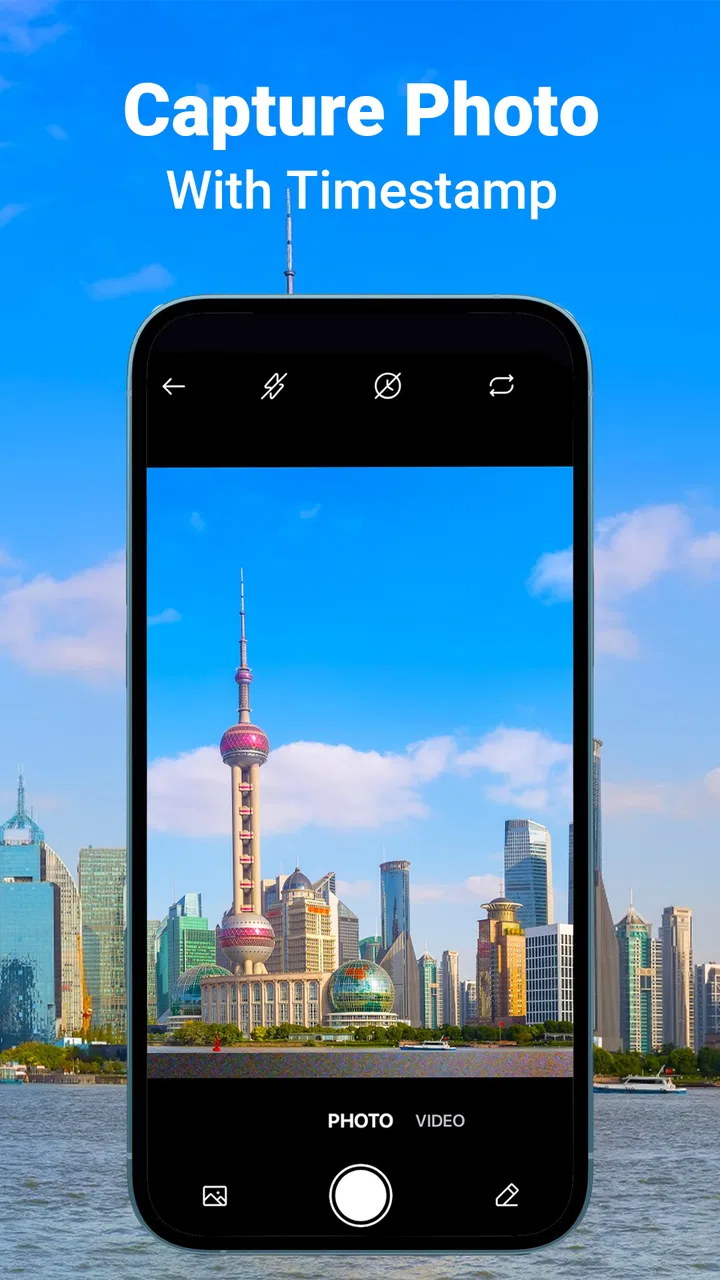
When I take photos for a trip, a property visit, or a small work project, the image itself is often only half the record. I also need to remember where it was taken and when. MeShot is built around that practical problem: it is a free photography app from HAWKS Technologies that places timestamp and location information on memory photos through a GPS camera workflow.
That sounds simple, and it is. The useful question is whether the extra information becomes part of the photo smoothly enough to help later, rather than turning every snapshot into a small administrative task. After using it with that in mind, I see it as a focused tool for people who want context attached to an image at the moment they capture it, not as a replacement for a full photo editor or a general camera app.
The app has a 4.6 average from around 560 ratings and has passed 1 million installs, which suggests that the basic idea is reaching plenty of people. It is rated for Everyone, runs on operating systems from version 10 onward, and its current version is 1.1.3. Those details make it approachable for a broad range of users, although the presence of optional in-app purchases priced at $9.99 per item is worth keeping in mind before settling into a regular workflow.
You May Also Like

 Blood Strike: 2.5 Anniversary
Blood Strike’s Loadouts Turn Every Drop Into a Tactical Gamble
A close look at Blood Strike’s custom loadouts: how fast access to signature weapons reshapes its battle royale rhythm, rewards preparation, and narrows the gap between fights.

 Pandora - Music & Podcasts
Pandora’s Music Is Easy to Start, but Harder to Recover
Pandora’s strength is its low-effort path from a seed to a station. Its weak spot is how much confidence it asks you to place in connection, setup, and quiet recovery.

 8 Ball Pool
 Is Built on Rivalries, Rematches, and Routine
A close look at the rivalries, rematches, shared routines, and unanswered safety questions that turn a quick pool match into a persistent mobile community.

 Samsung Music
’s Quiet Strength Is Playing What You Already Own
Its reach comes less from spectacle than from dependable access to a personal library. That simplicity is both the app’s strongest retention engine and its ceiling.

 AccuWeather: Weather Radar
AccuWeather Review: A Quick, Clear Forecast for Everyday Decisions
For everyday plans, the best forecast is the one you can understand quickly. AccuWeather makes rain timing, radar, and local conditions easy to act on, with a few trade-offs.

 Hill Climb Racing
Why Hill Climb Racing Still Turns Crashes Into One More Run
A tiny car, a bumpy hill and one more upgrade: Hill Climb Racing keeps resurfacing because its simple chaos makes every near-miss feel personal.
More From Our News Desk



From an ordinary photo to a usable visual record
I find the most useful way to judge MeShot is to start with the moment a photo needs to make sense to someone later. This section looks at how a visible time-and-place record can help with travel memories, property visits, and project documentation, while keeping the trade-off between useful context and a clean-looking image in view.
The starting point: when a normal camera is not enough
My usual starting condition is a phone full of pictures that look clear but become ambiguous a week later. A building entrance, a roadside view, a garden improvement, or a holiday landmark can be obvious at the time and surprisingly difficult to identify afterward. The phone’s photo library may retain capture details, but those details are not always visible when I share an image outside that library.
This is where a GPS camera can be more useful than the standard camera. The point is not simply to take a better-looking picture. It is to make the image carry a visible reminder of its context. If I send the file to someone who does not have access to my photo library, the timestamp and location can still travel with the picture.
I would not choose this app for every photograph. A portrait, a food photo, or a carefully composed street scene may look better without an information overlay. MeShot makes more sense when the date and place are part of the reason the photo matters. That distinction is important because the app’s value depends less on artistic camera controls and more on the usefulness of the finished record.
Preparing the capture instead of fixing it later
The strongest part of this approach is that it moves the labeling decision to the moment of capture. Rather than taking dozens of pictures and trying to organize them later, I can create a photo that already communicates its basic context. That is especially helpful when several people are collecting images for the same task and nobody wants to rename files manually afterward.
A practical example would be checking a rental property before handing it over. I can photograph the exterior, rooms, fixtures, and meter area while the visit is happening. When those images are passed to an owner or kept for future comparison, the visible date and location reduce the need for a separate note explaining where each image came from. The app does not remove the need for sensible file organization, but it can reduce one layer of uncertainty.
There is also a useful trade-off here. A visible stamp can improve accountability and memory, but it can also make an image less clean. I would keep the app for evidence-like records, travel documentation, field notes, and before-and-after comparisons, while using a regular camera for images intended to look polished or uncluttered.
The step-by-step flow during a visit
I would begin by opening MeShot before the subject is in front of me, rather than reaching for it after taking the first picture with another camera. The workflow works best when the app is treated as the capture point from the beginning. That avoids a common mistake: ending up with an ordinary image and then wondering whether its location can be reconstructed accurately later.
Next, I would frame the subject with the context in mind. A location stamp cannot compensate for a confusing photograph. If I am documenting a room, I would include enough of the room to make the image recognizable. If I am photographing a landmark, I would avoid cropping away the surroundings that explain where the picture was made. The overlay adds information, but it does not replace good composition.
After taking the image, I would check the result before moving on. This is a small habit with a large payoff. A timestamp or location can be technically present yet visually awkward, too close to an important detail, or difficult to read against the background. Reviewing the first few images lets me adjust the framing or the way I use the app before completing an entire set.
For a sequence of related photos, consistency matters more than speed. I would stand in a similar position where possible, keep the subject order logical, and capture wide context before close details. The stamp then becomes part of a coherent record instead of a collection of disconnected pictures. This is one of the less obvious benefits of using a dedicated camera workflow: it encourages me to think about the final handoff while I am still taking the photos.
What happens when the images leave the app
The handoff is where a stamped photo earns its place. Suppose I am sending images to a friend after a hike. A normal camera image may require a message such as “this was the overlook from the second trail.” A photo carrying its own date and location can communicate that context more directly. The recipient does not need to understand how I organized the original gallery.
The same idea applies to a family memory. Years later, a picture of a small café or an unfamiliar street may have little meaning to someone looking through a shared folder. A visible place and time can turn an otherwise anonymous image into a reminder. I like this use because it is not limited to formal documentation; it gives ordinary travel photos a durable caption without requiring a separate journaling habit.
For work, I would still add a short written note when the image needs a precise explanation. A location stamp can show where and when a photo was made, but it may not explain what changed, which item needs attention, or why the image was captured. In that situation, MeShot is best treated as one part of a handoff package: the photo provides visual proof and context, while the message supplies the decision or action required.
This distinction also helps avoid overtrusting the overlay. If a photo is being used for a dispute, inspection, or formal record, I would preserve the original files and any related notes instead of relying only on the stamped copy. The visible information is convenient for communication, but a complete record usually needs more than one layer.
Getting a useful result rather than a decorated image
The result I want from MeShot is not merely a picture with text on it. I want an image that can be understood when separated from the moment in which it was taken. That is why I would use the app selectively, capture enough surrounding detail, and inspect the first output before repeating the process.
For before-and-after work, the timestamp is particularly helpful because it makes the sequence easier to follow. I could photograph a repair, a renovation stage, or a garden project at different points and later compare the images without depending entirely on memory. The location adds another layer when the same kind of work is happening at multiple places.
For travel, the result is more personal. I can use the app when I want a visual diary that remains understandable after it is exported or shared. It is less suitable when I am trying to produce a clean album with a consistent visual style. In that case, I would rather use a normal camera and add captions later, even though that takes more effort.
There is also a privacy consideration in the finished image. A visible place can be helpful when sharing a public landmark, but it may be inappropriate for a private home, a child’s routine, or a location that should not be broadcast. I would check each image before sending it and avoid treating automatic context as automatically shareable context.
Where the workflow can break
The first possible break is dependence on location information at the time of capture. If the place shown on the image is important, I would not assume that every situation is equally suitable for immediate location labeling. Indoor spaces, dense urban areas, and moments when positioning is unreliable deserve an extra review. If the result looks wrong or unclear, I would not use it as a trustworthy record without checking it.
The second break is visual clutter. A stamp that helps one recipient may distract another. It can cover part of the subject, compete with a caption, or make a personal photo feel more like a report. This is not a flaw unique to MeShot; it is the central compromise of putting metadata directly onto an image. The right response is to choose the app for context-heavy photos, not to force every photo through it.
The third break is the handoff between a stamped image and the rest of the project. If I take photos in MeShot but keep notes, filenames, and follow-up actions somewhere else, the record can still become messy. My workaround would be simple: use a consistent order, group related images immediately, and add a short note when the visual context is not enough. The app can simplify the image itself, but it cannot organize an entire project automatically.
Another point to consider is the payment model. The app is free to start, but optional purchases cost $9.99 per item. I would first decide whether the basic workflow solves my problem before paying for anything extra. A person who only needs occasional location-aware memories may never need to spend money, while someone using it repeatedly should examine which optional functions are genuinely useful rather than assuming every paid item is necessary.
Who should use it, and who should choose another tool?
I think MeShot is a good fit for travelers who want place and time visible in shared photos, property owners documenting visits, people recording progress at different locations, and families who want older pictures to remain easier to identify. It is also useful for anyone who regularly sends images outside a personal gallery and wants the context to stay attached.
I would skip it for serious photography where a clean frame is the priority. I would also look elsewhere if I needed advanced manual camera controls, detailed editing, batch organization, or a complete project-management system. A dedicated photo editor is better for correcting and styling images; a notes or field-reporting app may be better when text, checklists, and approvals matter more than the photograph.
Compared with the usual phone camera, MeShot offers a more direct way to make context visible in the image, but the standard camera is usually the better choice for speed, simplicity, and clean composition. Compared with adding captions afterward, MeShot saves a step and reduces the chance of forgetting details, though post-capture organization gives me more control over what becomes public. Its advantage is not that it replaces all alternatives; it is that it handles one narrow need at the point where the photo is created.
My recommendation after following the complete workflow
HAWKS Technologies has kept this photography app focused on a problem I regularly encounter: a picture can survive while its story disappears. MeShot helps by putting the basic time-and-place context into the visual record before the image is passed along. That makes it more practical than a generic camera when the photo needs to explain itself later.
I would use it with a deliberate routine: decide whether the image really needs a stamp, frame enough context, inspect the first result, keep related photos together, and review privacy before sharing. Those steps matter because the app is strongest when it supports a clear workflow, not when it is used automatically for every snapshot.
With a free price, Everyone age rating, and support for operating systems from version 10, it is easy to try for occasional documentation or travel memories. The 4.6 average and more than a million installs also make it a familiar choice in its niche, while the optional $9.99 purchases mean I would evaluate any extras against my actual routine.
My final view is positive but specific: MeShot is most valuable when location and time are part of the message of the photo. It is not the camera I would choose for a polished album, and it cannot replace careful notes for a formal record. For everyday situations where I need a photograph to carry its own context through a handoff, however, it is a sensible and focused tool.
FAQs for MeShot: GPS Camera & Geo Stamp
01What is MeShot: GPS Camera & Geo Stamp, and how does it work?
MeShot: GPS Camera & Geo Stamp is a photography app that allows users to capture photos with embedded GPS coordinates and geo stamps. It utilizes the device's GPS to accurately tag the location where the photo is taken. This feature is particularly useful for travelers and outdoor enthusiasts who want to document their journeys with precise location data.
02Can I customize the geo stamp information on my photos?
Yes, MeShot offers customization options for geo stamps. Users can select the information they wish to display, such as GPS coordinates, address, date, and time. The app also provides different styles and formats for the geo stamp, allowing for personalized photo documentation that suits the user's preferences.
03Is an internet connection required to use MeShot: GPS Camera & Geo Stamp?
While an internet connection can enhance the app’s functionality, especially for mapping features, it is not strictly necessary for capturing photos with geo stamps. The app can use the device's built-in GPS to determine the location, but users should ensure GPS is enabled on their device for accurate tagging.
04How does MeShot handle privacy and data security?
MeShot prioritizes user privacy and data security by ensuring that location data is stored locally on the device and not shared without user consent. Users have control over their data and can choose which photos to share. The app also provides options to disable geo tagging if privacy is a concern.
05What devices and operating systems are compatible with MeShot: GPS Camera & Geo Stamp?
MeShot is compatible with both Android and iOS devices. It supports a wide range of smartphones and tablets running on these operating systems. Users should ensure their device meets the minimum system requirements outlined in the app store to enjoy a seamless experience.
Pros
- Easy to use with intuitive interface.
- Accurate GPS tagging on photos.
- Variety of geo stamp styles available.
- Seamless social media sharing.
- Low battery consumption.
Cons
- Limited free version features.
- Occasional GPS inaccuracies.
- Requires internet for full functionality.
- Ads can be intrusive.
- Lacks advanced photo editing tools.

MeShot: GPS Camera & Geo Stamp
Gallery